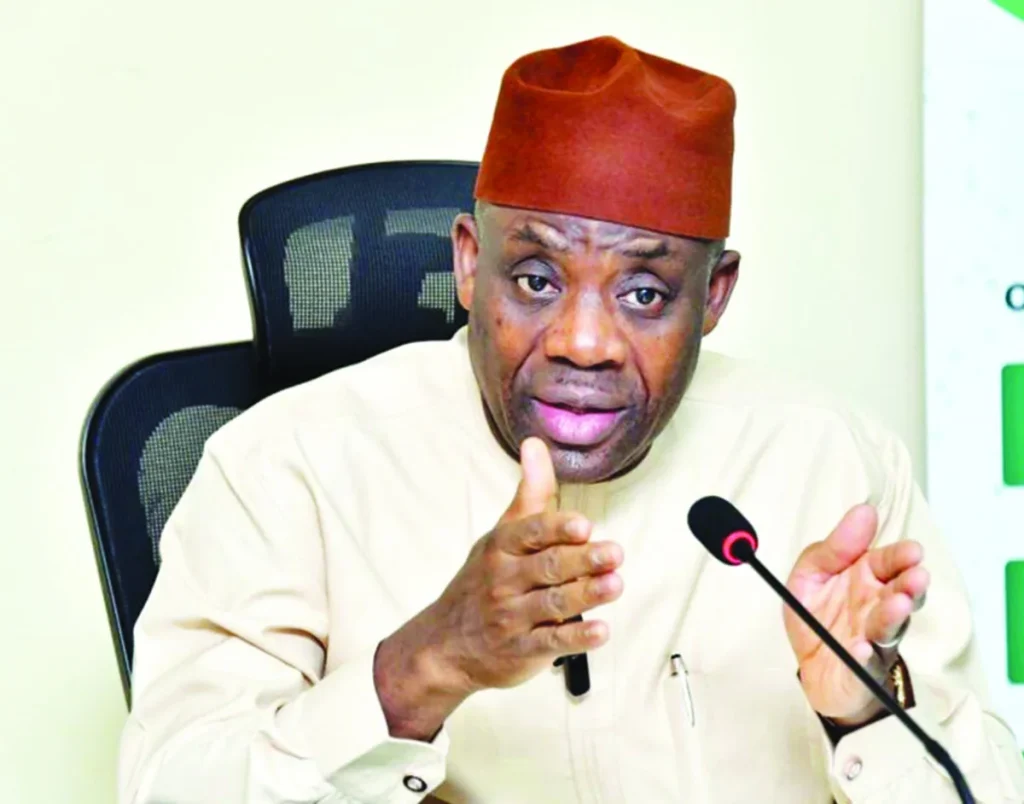
 A leading technology expert has warned African governments that Artificial Intelligence (AI) reforms risk failing or worsening inequality if they are driven solely by technology without putting human behaviour at the centre of policy design.
The call was made by Adeoye Abodunrin, a Technology Expert and Africa AI Transformations Coach, who urged governments, policymakers and institutions across the continent to integrate behavioural economics into their AI strategies.
Speaking during a media briefing in Lagos, Abodunrin stressed that Africa’s AI future must go beyond advanced algorithms and digital infrastructure to include a deep understanding of human behaviour, decision-making patterns and socio-cultural realities.
According to him, “AI will only deliver inclusive growth in Africa if we design systems that understand how Africans think, decide, trust and adapt. Without behavioural economics, AI policies may look impressive on paper but fail at the implementation level that matters most.”
Abodunrin noted that many AI strategies currently being adopted across Africa place heavy emphasis on technology acquisition while neglecting the behavioural incentives that influence adoption, productivity and public trust.
He explained that behavioural economics offers governments practical tools to design AI-enabled policies that actually work in African contexts, particularly in critical sectors such as digital identity systems, financial inclusion, healthcare delivery, education, taxation and broader public service reform.
“Africa does not suffer from a lack of ideas or talent,” he said. “What we often miss is alignment—aligning technology with behaviour, culture and incentives. Behavioural intelligence is what turns AI from a shiny tool into a true development engine.”
Highlighting Nigeria’s growing role in the AI space, Abodunrin pointed out that the country is emerging as a global leader in AI adoption, with usage patterns showing rapid integration of the technology into learning, work, entrepreneurship and everyday problem-solving.
He, however, cautioned that the continent must avoid prioritising infrastructure and algorithms at the expense of the human factor.
“AI holds immense potential for Africa, but we cannot ignore the human behaviour that determines how these technologies are used and trusted by citizens. In the AI era, behavioural insight is not optional—it is fundamental to inclusive growth, innovation and social impact,” Abodunrin concluded,