
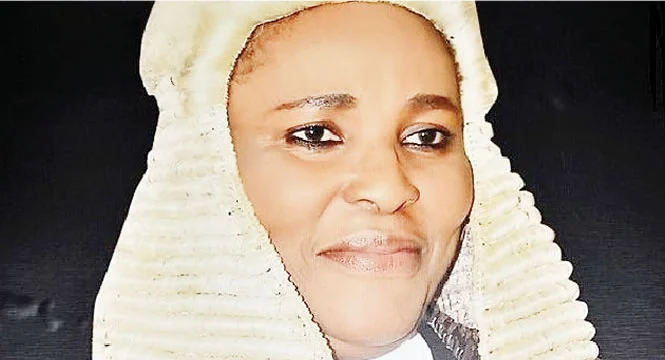
The Chief Judge of Ogun State, Mosunmola Dipeolu, has called for stronger collaboration among justice sector stakeholders and the adoption of technology-driven solutions to improve the handling of sexual violence cases in Nigeria.
Speaking through Justice Funke Odubanjo at a stakeholders’ forum in Abeokuta, Dipeolu stressed that coordinated efforts involving the police, judiciary, legal practitioners, government agencies, and civil society organisations are critical to ensuring justice for survivors. The event, themed “Strengthening Laws, Policies, and Institutional Coordination to Improve Justice Delivery in Sexual Violence Cases,” was organised by the Headfort Foundation for Justice.
Push for Technology in Court Processes
Dipeolu advocated the use of digital tools such as video-link facilities in courtrooms, particularly for vulnerable witnesses. According to her, allowing survivors—especially children and traumatised individuals—to testify remotely can significantly reduce the emotional distress of facing alleged offenders in open court.
She noted that the judiciary must evolve to ensure courtrooms become safe spaces where survivors are protected and offenders are held accountable.
Judiciary’s Role in Upholding Justice
Describing the judiciary as central to the fight against sexual violence, the Chief Judge said courts must not only interpret the law but also shape societal attitudes toward such crimes.
“We are the guardians of the Constitution and arbiters of justice. Our conduct, rulings, and sentencing either reinforce harmful stereotypes or uphold the dignity and rights of survivors,” she stated.
Dipeolu referenced Section 34 of the 1999 Constitution, which guarantees the dignity of the human person, as the legal foundation for protecting survivors seeking justice.
Legal Framework and Persistent Challenges
She highlighted the Violence Against Persons (Prohibition) Law as a strong legal framework that broadens the definition of sexual offences, strengthens survivor protection, and prescribes stricter penalties for offenders.
However, she identified key barriers to justice, including delays in legal proceedings, evidential challenges, adversarial courtroom practices, and weak institutional coordination.
To address these gaps, Dipeolu called for clearer sentencing guidelines, improved investigative processes, and enhanced collaboration across institutions.
Call for Collective Responsibility
The Chief Judge emphasised that tackling sexual violence requires a whole-of-society approach. She urged:
- The executive to provide adequate funding for justice institutions
- The legislature to strengthen legal frameworks
- The police to investigate cases professionally and empathetically
- Civil society to support survivors and promote accountability
- The media to report responsibly and avoid sensationalism
Stakeholders Seek Stronger Support
In her remarks, the Executive Director of the Headfort Foundation for Justice, Oluyemi Orija, said the forum aimed to improve access to justice and promote a survivor-centred approach to handling sexual violence cases.
She noted that while stakeholders—including the Nigerian Bar Association, the International Federation of Women Lawyers, and law enforcement agencies—are committed to reforms, sustained government funding remains essential to achieving meaningful progress.
Dipeolu also commended the foundation’s impact, revealing it has reached over 500,000 women with information on accessing justice, and urged more organisations to help bridge the gap between legal frameworks and the people they are designed to protect.
The renewed call for innovation and collaboration underscores growing efforts to strengthen Nigeria’s justice system and ensure more effective protection for survivors of sexual violence.