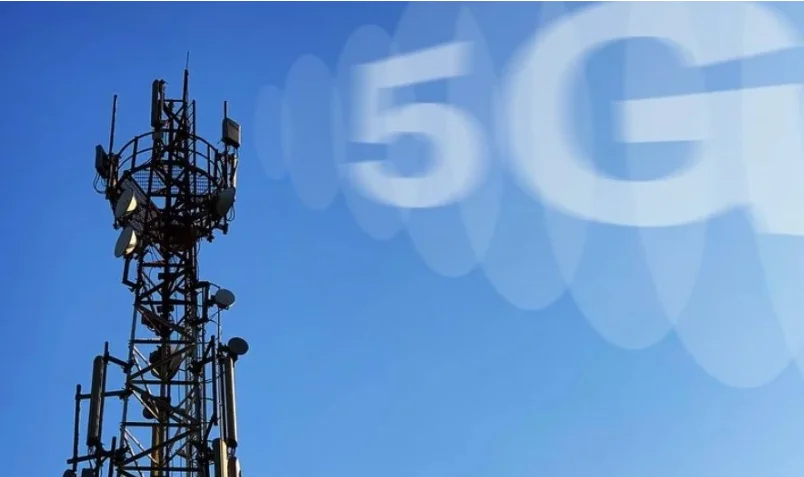
Nigeria’s rollout of fifth-generation (5G) mobile technology continues to lag behind device adoption, with a national average coverage gap of 55% as of December 2025, according to the latest Quality of Experience (QoE) data from the Nigerian Communications Commission (NCC) and Ookla.
The findings highlight a widening disconnect between 5G-ready smartphones and the availability of reliable network infrastructure, even in Nigeria’s most commercially active cities.
Device Readiness Outpaces Network Availability
Despite growing ownership of 5G-enabled devices, Nigeria’s largest urban centres remain largely underserved by 5G networks.
- Lagos recorded 27% average 5G coverage
- FCT Abuja recorded 31% coverage
This means the majority of users with 5G-capable smartphones in these cities are still operating on 4G networks, despite the higher speeds and lower latency promised by 5G technology.
Infrastructure Challenges Slow 5G Expansion
While 5G offers faster data speeds, lower latency, and support for massive device connectivity, the rollout has been slowed by complex infrastructure requirements, including site densification, fibre backhaul, and high capital costs.
Nigeria’s 5G journey began in September 2022, when MTN launched commercial services in Lagos and select cities. Airtel followed in June 2023, while Mafab Communications launched in Abuja and Lagos in January 2023, but is yet to fully commence operations.
Despite these launches, overall 5G availability remains inconsistent. With average coverage hovering around 65% in key cities, a 5G-enabled device still fails to connect to a 5G network more than half the time.
Lagos Records the Widest Coverage Gap
Quarterly data shows that Lagos has the widest 5G coverage gap, standing at 55.4% overall.
In high-density commercial districts, the situation is even more pronounced:
- MTN: 50% coverage gap
- Airtel: 77% coverage gap
- Combined gap in commercial zones: ~64%
Business hubs such as Lagos Island and Victoria Island are particularly affected, raising concerns for sectors that rely heavily on low-latency, high-speed connectivity to meet operational demands.
Abuja Performs Better, But Gaps Persist
The FCT Abuja recorded a 47.4% coverage gap, performing slightly better than Lagos. However, the data still shows that nearly half of potential 5G connections fail, even in the nation’s capital.
Urban centres with 30–40% coverage continue to outperform rural areas, reinforcing the long-standing urban-rural digital divide in Nigeria’s telecom landscape.
Structural Gaps in Nigeria’s 5G Strategy
The data exposes a fundamental challenge: Nigeria’s 5G rollout is trailing far behind user readiness, leaving a large portion of potential value untapped.
The report recommends that operators prioritise network densification in Lagos and Abuja, where reducing the 55% gap could immediately unlock 5G access for millions of users already equipped with compatible devices.
Spectrum Re-Farming and Rural Expansion Needed
With 2G and 3G networks still accounting for nearly half of Nigeria’s subscriber base, analysts say there is an urgent need to accelerate legacy network phase-out. This would free up spectrum for 4G and 5G expansion, improving efficiency and performance.
Operators are also encouraged to increase investment in rural areas and underserved states, where broadband penetration remains low and the digital divide is most severe.
5G and Nigeria’s Digital Economy Ambitions
As Nigeria pushes to expand broadband connectivity and improve network latency, closing the 5G coverage gap will be critical to supporting innovation, digital services, and economic growth.
Improved next-generation connectivity is seen as a key enabler of Nigeria’s ambition to build a $1 trillion digital economy, making 5G deployment not just a telecom issue, but a national economic priority.