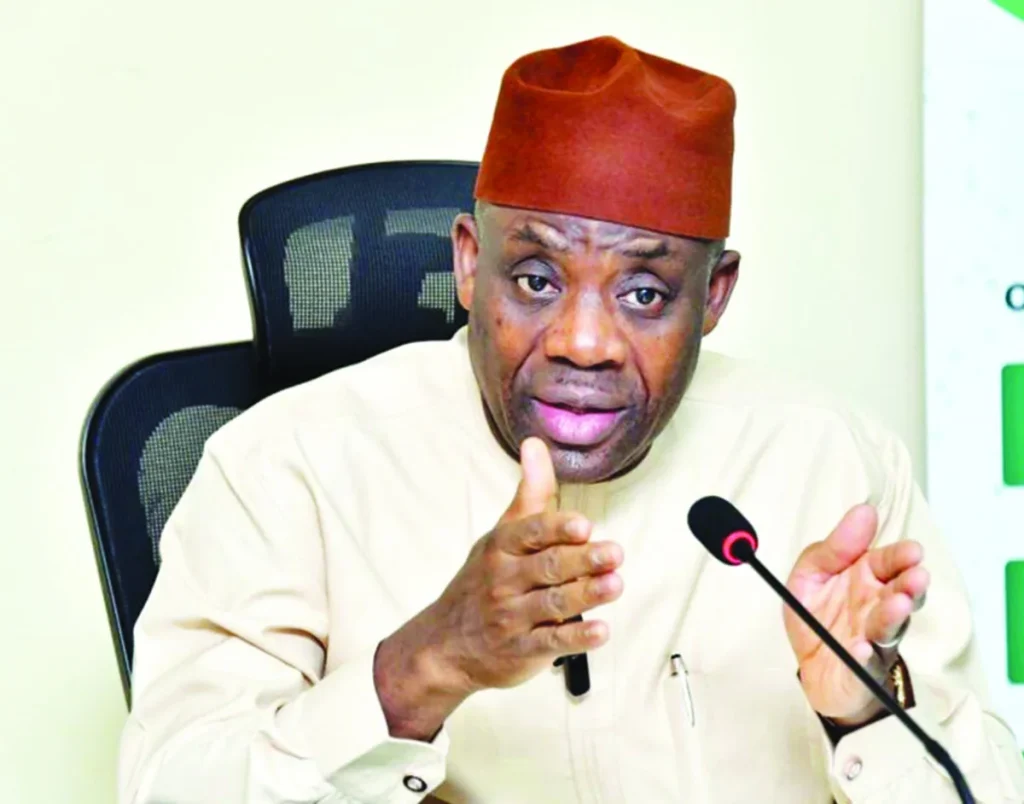
Nigeria’s Minister of Education, Tunji Alausa, has emphasised that technology-driven learning is essential to unlocking the country’s human capital potential, warning that digital skills are now critical for building a globally competitive workforce.
Speaking at the commissioning of the Katsina State Smart Secondary School, the minister described the project as a strategic investment in Nigeria’s future, designed to equip students with skills needed to thrive in a digital, knowledge-based economy.
According to Alausa, the federal government is prioritising innovation in education as part of broader reforms aimed at creating a future-ready system. He noted that smart schools go beyond physical infrastructure, serving as hubs for digital learning, innovation, and opportunity.
Human Capital Challenges Persist
His remarks come amid growing concerns about Nigeria’s human capital development, with stakeholders warning that poor learning outcomes and systemic challenges in the education sector continue to limit productivity and economic growth.
Data from the World Bank shows Nigeria’s Human Capital Index stood at 0.36 in 2020—indicating that a child born in the country is likely to achieve just 36 percent of their potential productivity due to gaps in education and health.
Government Expands Reforms, Investments
Highlighting ongoing interventions, Alausa revealed that over N106 billion in Universal Basic Education Commission (UBEC) matching grants have been accessed by states. These funds have supported the renovation of more than 10,000 classrooms, large-scale teacher training, and the distribution of millions of textbooks nationwide.
He also pointed to key reforms, including curriculum updates, expansion of Technical and Vocational Education and Training (TVET), and digital initiatives such as the Learner Identification Number and a cloud-based Annual School Census to improve data-driven planning.
According to the minister, more than 160,000 young Nigerians are currently enrolled in over 1,200 TVET centres, with applications surpassing one million—an indication of rising demand for practical, skills-based education.
States Back Digital Education Push
Katsina State Governor Dikko Radda described the smart school initiative as a deliberate investment in the future of children, particularly those in underserved communities.
Similarly, AbdulRahman AbdulRazaq, who also chairs the Nigerian Governors’ Forum, commended the project and urged stakeholders to maximise its potential.
The Federal Ministry of Education reiterated its commitment to partnering with state governments and development partners to expand access to inclusive, technology-driven education, positioning smart schools as a model for modern learning in Nigeria.