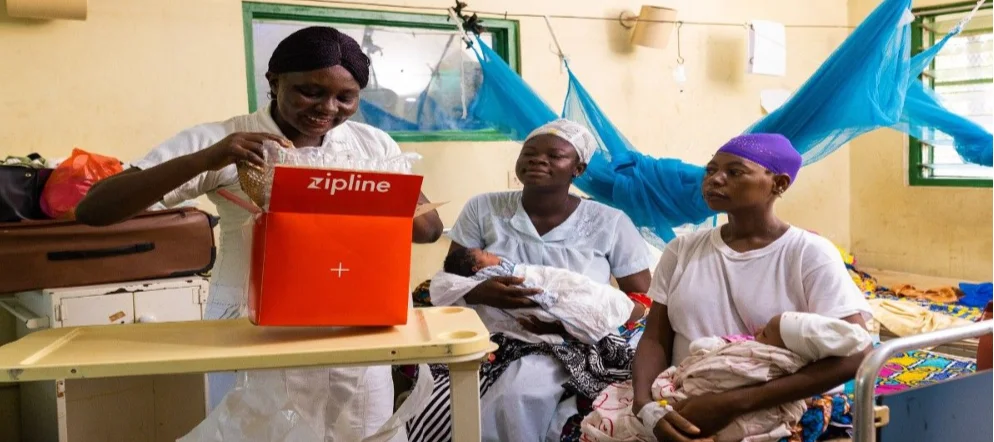
US Funds Zipline With $150 Million to Expand Medical Drone Network Across Africa
The U.S. Department of State has committed $150 million to Zipline to expand its autonomous medical drone delivery network across Africa. The funding will operate on a pay-for-performance model, meaning African governments must sign expansion agreements and commit to ongoing operational costs. This model is designed to ensure long-term sustainability within national public health systems.
Scaling Healthcare Access Across the Continent
Zipline, already the world’s largest autonomous logistics platform, has operated in Africa since 2016, delivering blood, vaccines, and critical medical supplies to more than 5,000 hospitals and health facilities. With the new U.S. backing, Zipline plans to scale its system to reach:
- 130 million people
- Over 15,000 health facilities (tripling current coverage)
This expansion marks one of the most significant investments ever made in Africa’s healthcare logistics infrastructure.
Economic Impact: Jobs and Regional Growth
The initiative is expected to create more than 800 high-skilled jobs across fields such as:
- Robotics
- Artificial intelligence (AI)
- Healthcare logistics
- Operations and maintenance
Once fully rolled out, Zipline projects the program could drive up to $1 billion in annual economic gains, helping to reduce regional logistical bottlenecks and boosting productivity.
Rwanda Takes the Lead in Expansion
Rwanda will be the first beneficiary of the U.S.-backed initiative. Plans include:
- Establishing a third distribution centre
- Doubling daily drone delivery capacity
- Deploying short-range precision drones for urban deliveries
- Setting up a main testing facility for Zipline’s hardware and software
Rwanda has long served as a flagship example of how drone logistics can transform healthcare delivery.
Expansion Plans in Nigeria, Kenya, and Côte d’Ivoire
Nigeria
Zipline currently operates in three Nigerian states, helping reduce stockouts of medical supplies and increasing treatment rates. The new funding will support broader expansion nationwide.
Kenya
Zipline aims to expand coverage in western Kenya and integrate its system with the national health network, improving last-mile delivery across rural and urban regions.
Côte d’Ivoire
Zipline will extend its services to more communities, strengthening the supply chain for essential medical products and supporting local health facilities.
Improved Health Outcomes Across Africa
Zipline’s operations have already demonstrated a significant public health impact:
- Up to 56% reduction in maternal mortality in Rwanda and Ghana
- 40%+ decrease in missed first vaccine doses
- Significant reduction in missed malaria treatments
- Over 1.7 million safe deliveries across 120 million miles flown
- Zero accidents reported
These improvements show the transformative potential of autonomous logistics in healthcare.
Environmental and Community Benefits
Zipline’s electric drones have replaced extensive ground transport, resulting in:
- 900,000+ gallons of fuel saved
- 97% reduction in CO₂ emissions
- Better accessibility to medicines for remote communities
- Local job creation and workforce development
A Partnership for Sustainable Public Health
U.S. and African officials emphasise that the results-driven funding model encourages governments to invest in long-term system integration, while expanding life-saving services. The partnership showcases how technology, innovation, and sustainability can collectively address Africa’s public health challenges.