
Nigeria’s Federal Ministry of Communications, Innovation & Digital Economy has announced a fresh push to address persistent telecom service challenges across the country, warning operators to improve network quality and deliver better services to subscribers.
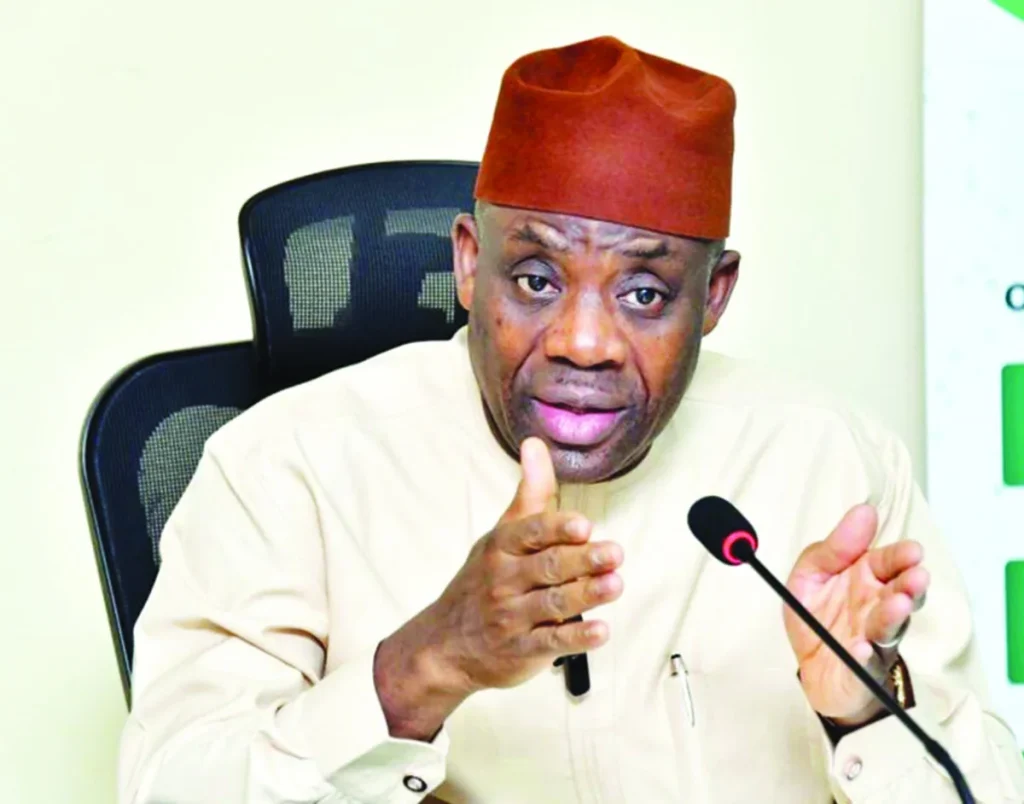
The directive was issued by the Minister of Communications, Innovation and Digital Economy, Bosun Tijani, who said telecom companies must take immediate responsibility for resolving network issues affecting millions of Nigerians.
In a statement shared via his official X account, Tijani disclosed that the Federal Government is rolling out both short-term and long-term reforms aimed at transforming Nigeria’s digital infrastructure and improving nationwide connectivity.
According to the minister, the government has secured World Bank-backed funding to launch Project BRIDGE, a nationwide open-access fibre infrastructure initiative designed to expand broadband penetration and strengthen internet access across the country.
He also revealed that fibre deployment projects and new telecom tower rollouts under the Nigerian Universal Communication Access Project (NUCAP) are expected to commence before the end of the year, alongside expanded satellite connectivity initiatives.
“These investments will permanently transform connectivity across Nigeria within two to five years,” Tijani stated.
Highlighting the government’s digital inclusion goals, the minister said small business owners and households should be able to access reliable high-speed internet services without depending solely on unstable mobile networks or internet dongles.
As part of efforts to stabilise the telecom sector in the short term, the government has introduced reforms including tariff adjustments, tax harmonisation, and the classification of telecom infrastructure as critical national assets.
Tijani noted that broader economic reforms, including the floating of the naira and the removal of fuel subsidies, have also created a more transparent and market-driven operating environment for telecom companies.
The minister said major operators such as MTN Nigeria, Airtel Nigeria, Globacom, and 9mobile have now returned to profitability, giving them the financial capacity to improve service quality and expand infrastructure.
“The conditions required for improved service delivery have now been established. It is now the responsibility of telecom operators to resolve network challenges and deliver the level of service Nigerians expect,” he said.
The minister further disclosed that the Nigerian Communications Commission has been empowered to strictly enforce quality-of-service standards, with citizen feedback and periodic performance reports expected to guide regulatory actions.
He assured Nigerians that measurable improvements in call quality, internet speed, data performance, and network coverage should become noticeable in the coming months.
Tijani added that operators delivering improved services would receive government recognition, while those failing to meet regulatory standards could face decisive sanctions from the NCC.
“Nigerians should begin to see improvements in Quality of Service and get value for what they paid for now and in the future. We will ensure that the sector delivers,” he stated.