The Federal Government has said the establishment of Smart Model Secondary Schools in Katsina State will strengthen Nigeria’s transition toward technology-driven education and equip students with critical digital and innovation skills needed for the global economy.
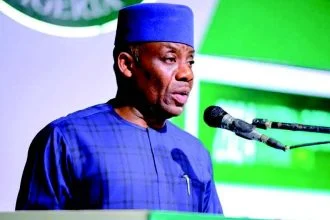
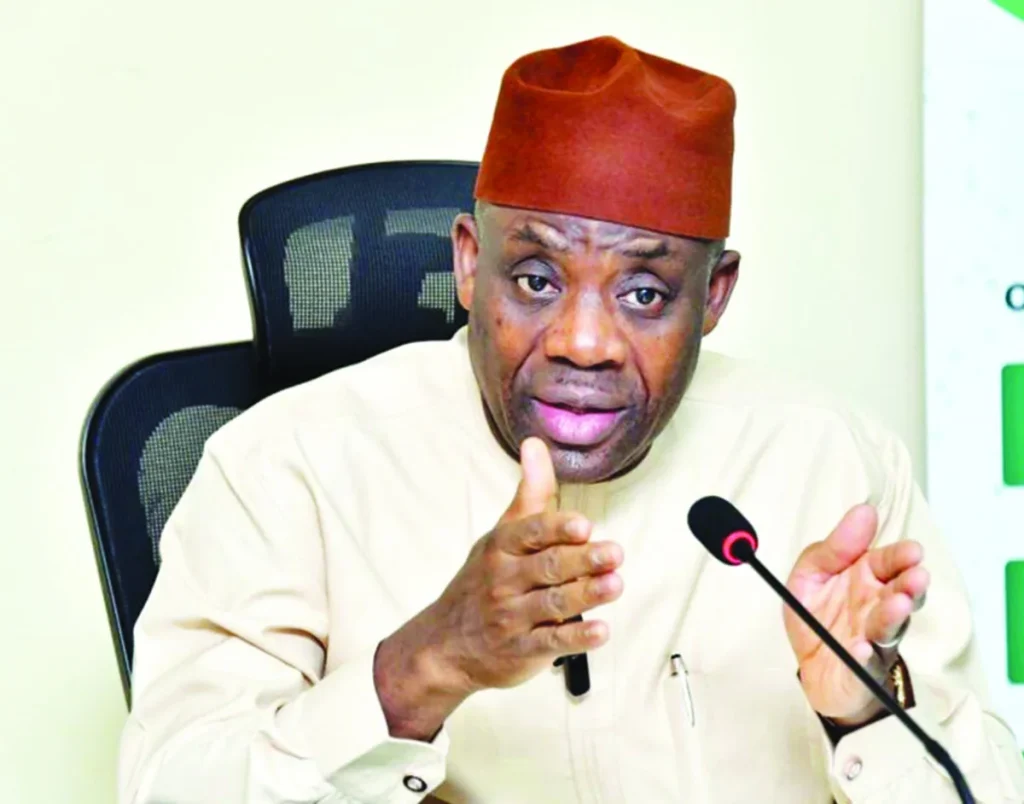
Speaking during the inauguration of the Smart Model Secondary School in Radda community, Katsina State, Nigeria’s Minister of Education, Tunji Alausa described the initiative as a major milestone in the country’s education reform agenda.
According to the minister, the smart schools will provide students with access to modern learning facilities, digital tools, and technology-based teaching methods aligned with international educational standards.
Beyond the newly commissioned Radda Smart School, the Katsina State Government is also developing similar institutions in Jikamshi and Dumurkul communities, with construction already at advanced stages.
Alausa said the project represents more than physical infrastructure, describing it as a strategic investment in innovation, human capital development, and future workforce readiness.
“The Smart School represents innovation, opportunity, and a deliberate investment in the future of Nigerian children,” the minister stated.
He added that the initiative aligns with President Bola Ahmed Tinubu’s Renewed Hope Agenda and forms part of broader reforms under the Nigerian Education Sector Renewal Initiative (NESRI).
According to Alausa, the federal government is prioritising the expansion of access to education, strengthening Science, Technology, Engineering, Mathematics and Medical Sciences (STEMM), and boosting Technical and Vocational Education and Training (TVET) nationwide.
The minister disclosed that more than N106 billion in Universal Basic Education Commission matching grants has been accessed by states within the last 18 months, while over N22 billion has been invested in teacher development programmes across the country.
He further revealed that more than 10,000 classrooms have been renovated nationwide, nearly 978,000 teachers trained, and over 7.8 million textbooks distributed to schools.
Alausa also highlighted ongoing digital reforms in the education sector, including the deployment of a cloud-based Annual School Census and the introduction of a Learner Identification Number system aimed at improving transparency, accountability, and data-driven planning.
The minister said over 160,000 young Nigerians are currently undergoing training in more than 1,200 Technical and Vocational Education and Training centres nationwide, with over one million applications recorded in the latest phase of the programme.
He reaffirmed the federal government’s commitment to tackling the out-of-school children crisis through stronger collaboration with state governments.
In his remarks, Katsina State Governor Dikko Umaru Radda said the smart school initiative fulfils a long-standing vision to modernise education and prepare students for future opportunities in a rapidly evolving digital world.
“This initiative is about preparing our children not just for today, but for the future,” Radda said.
The governor explained that the schools are designed to nurture innovation, leadership, and global competitiveness among students while reinforcing Katsina’s historical reputation as a centre of learning and intellectual excellence.
“This school is not just about buildings; it is about shaping minds and preparing a generation capable of driving innovation globally,” he added.
Meanwhile, the Katsina State Government also disclosed significant gains in its ongoing security operations across the state.
According to state officials, more than 30 previously deserted political wards affected by banditry and insecurity have now been reclaimed and resettled following intensified security interventions.
The state’s Chief of Staff, AbdulKadir Mamman Nasir, said community-based security measures, including the establishment of the Community Security Watch Corps, have contributed significantly to restoring stability in rural communities.
Nasir disclosed that over 2,000 locally recruited security personnel are currently supporting intelligence gathering and grassroots security operations across vulnerable areas.
He added that combined operations involving local security operatives and formal security agencies have led to the arrest of more than 1,000 suspected bandits and informants.
The Katsina State Government also revealed that investments in armoured vehicles, patrol trucks, motorcycles, drones, and surveillance technology have improved mobility and security response capabilities across affected communities.
Officials said the interventions have resulted in the gradual return of farming and economic activities in several communities previously displaced by insecurity.