
FG Targets Internet Access for 20 Million Nigerians Leveraging NigComSat
The Federal Government has announced plans to deliver internet access to 20 million Nigerians, using the Nigerian Communications Satellite Limited (NigComSat) to drive nationwide digital inclusion and support innovations such as telemedicine.
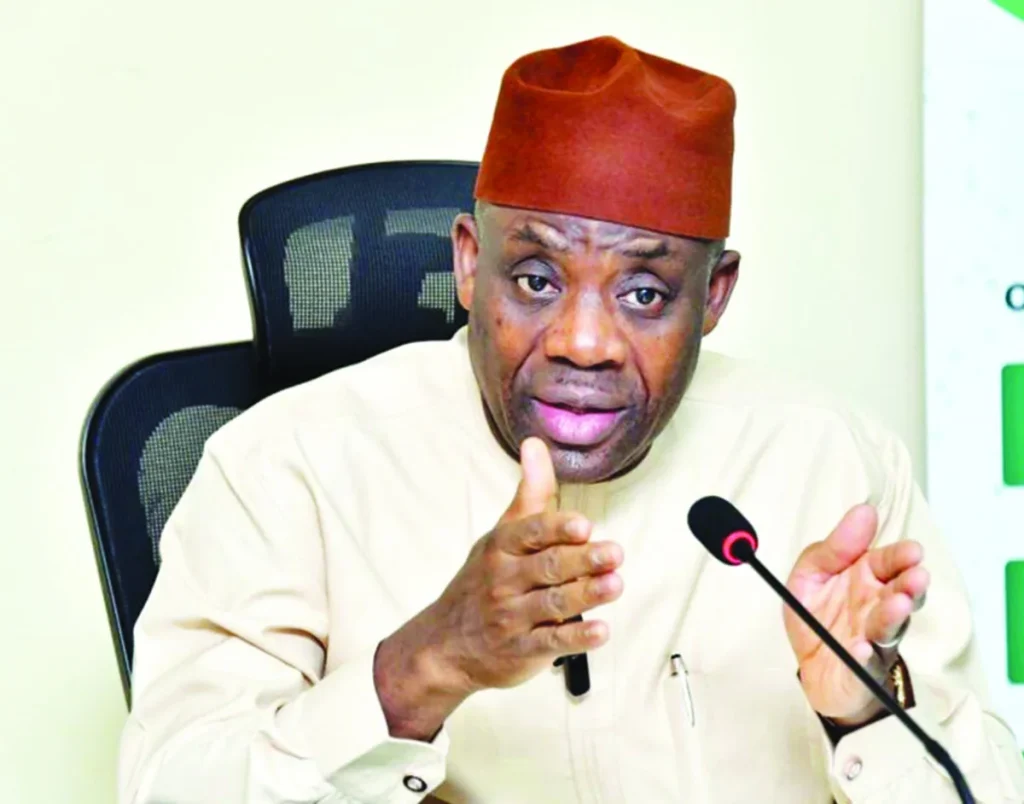
The Minister of Communication, Innovation and Digital Economy, Dr Bosun Tijani, represented by the Director of the National Centre for Artificial Intelligence and Robotics (NCAIR), Ajala Olubumi, disclosed this on Tuesday during a public–private sector stakeholders’ engagement roundtable hosted by AI-powered telemedicine platform MySmartMedic, attended by Nairametrics.
The update follows NigComSat’s recent announcement of plans to generate N8 billion in revenue over the next three years by expanding its broadband services across the country. According to Olubumi, improved connectivity remains essential for delivering the benefits of digital healthcare to underserved populations.
“For technology like this to truly deliver transformation, we must have connectivity. And we still have about 20 million Nigerians that have no access at all to the internet. We’re leveraging NigComSat to beam internet to locations because Nigeria is one of the few nations in West Africa with its own satellite,” he said.
Data Protection a Must for Digital Health Operators
The National Commissioner/CEO of the Nigeria Data Protection Commission (NDPC), Dr Vincent Olatunji, represented by Barr. Alexander Onwe urged Health Maintenance Organisations (HMOs) and telemedicine providers to embed data protection into the architecture stage of their platforms in line with Nigeria’s data protection laws.
He emphasised that while digital transformation is critical for universal health coverage, electronic medical records, AI diagnostics, remote monitoring, and mobile outreach must operate within a framework that protects user privacy and prevents data misuse.
Onwe stated that the Nigeria Data Protection Act (NDPA) 2023 remains a crucial foundation for building a trustworthy digital health ecosystem. He noted that operators must ensure:
- Explicit and informed consent from users, especially for remote consultations and automated decision-making.
- Minimal data collection, retaining only what is necessary.
- Purpose-bound data usage as communicated to patients.
- Compliance for cross-border data transfers, which may involve foreign cloud hosts or remote specialists.
Telemedicine as a Lifeline for Nigeria’s Health System
Founder of MySmartMedic, Dr. Chuks Ekweme, highlighted during a press interview that the platform aims to ease access to medical advice by allowing doctors to consult from anywhere, improving responsiveness and coverage.
He noted that Nigeria’s healthcare gap remains wide, citing the ratio of one doctor to 4,000 patients, far below the World Health Organization’s recommended ratio. Telemedicine, he emphasised, is therefore not optional, it is essential.
“Telemedicine innovation is critical and should be supported, especially considering the doctor–patient ratio in Nigeria,” he said.
Conclusion
With the Federal Government’s push to expand satellite-driven broadband access and the private sector’s growing investment in digital health tools, Nigeria is positioning itself to enhance connectivity, bridge healthcare gaps, and accelerate digital transformation—while upholding strict data protection standards.