Kenyan legislators have revisited the 2022 Information and Communications (Amendment) Bill, which proposes separating Safaricom, the country’s largest telecommunications provider, from M-PESA, its mobile money service. A previous attempt to pass this legislation failed due to limited support in parliament.
The proposed split aims to curtail Safaricom’s market dominance by creating two distinct entities, subjecting M-PESA to more direct regulatory oversight. If enacted, the bill would legally mandate Safaricom to separate its mobile money operations, a measure the company has consistently resisted, arguing it would not benefit shareholders. Safaricom maintains that its integration with M-PESA provides a unique competitive advantage compared to rivals such as Airtel Africa and MTN, which have already spun off their mobile money businesses.
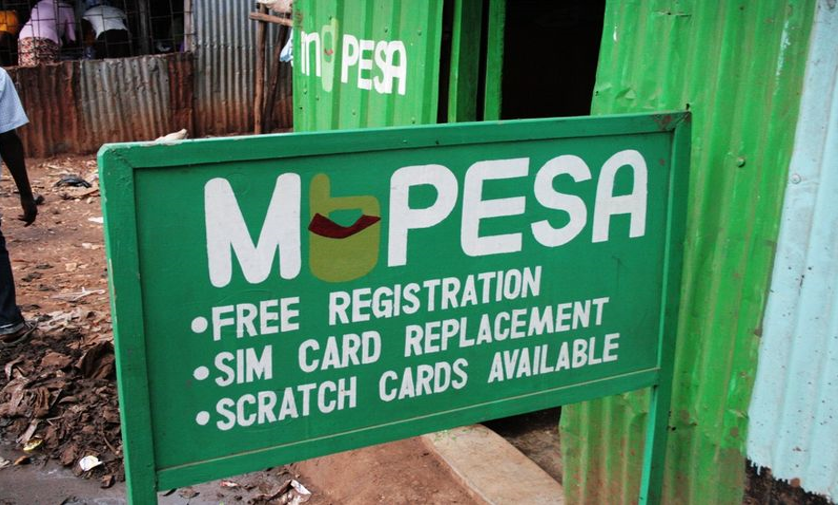
M-PESA is Kenya’s largest payment platform, with 31.3 million active users between March 2023 and March 2024, processing over $312 billion (KES 40.2 trillion) in transactions during that period. Regulators, including the Central Bank of Kenya (CBK) and the Communications Authority of Kenya (CA), have advocated for a split, with CBK seeking to strengthen its oversight of M-PESA’s operations.
Despite this pressure, Safaricom’s CEO Peter Ndegwa announced in May that the company plans to establish a holding company by 2025, organizing its divisions, including M-PESA, under one umbrella structure. This move aims to streamline operations while maintaining integration. Ndegwa argued that splitting the business could lead to significant financial implications, including a $582 million (KES 75 billion) tax bill, which would exceed the company’s 2023 net profit of KES 52.48 billion.
Safaricom also questioned the benefits of a split, noting that competitors like Airtel and MTN have not necessarily achieved better valuations despite separating their mobile money units. While these moves allowed rivals to raise capital, Safaricom asserts it does not currently need additional funding.
The debate underscores the tension between regulatory oversight, market competition, and business strategy as Safaricom and M-PESA continue to dominate Kenya’s financial and telecommunications landscape.