
World Bank Deploys Blockchain-Based FundsChain in Nigeria to Boost Project Transparency
The Federal Government has confirmed the rollout of the World Bank’s blockchain-driven FundsChain platform in Nigeria, marking a major step in efforts to strengthen oversight of donor-funded projects and curb financial leakages.
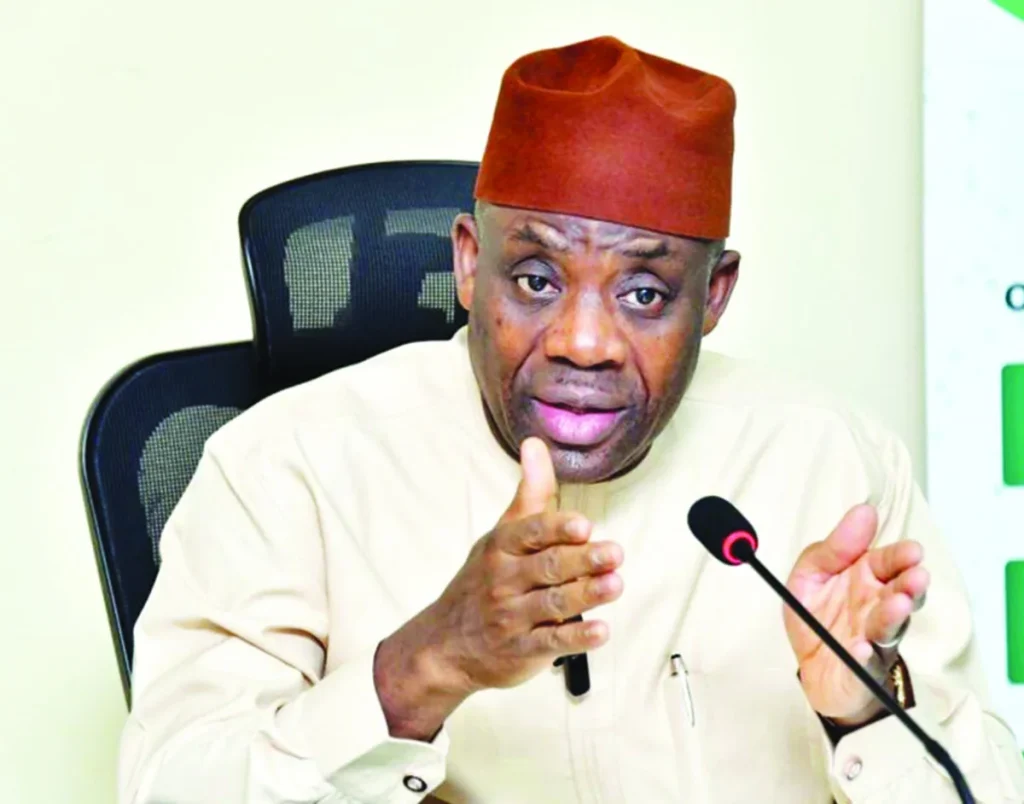
The announcement was made through a statement by Bawa Mokwa, Director of Press at the Office of the Accountant-General of the Federation (OAGF), following a high-level financial management workshop held in Abuja.
A New Era of Blockchain-Backed Transparency
Speaking at the workshop, the Accountant-General of the Federation (AGF), Dr. Shamseldeen Babatunde Ogunjimi, described FundsChain as a “ground-breaking” tool that will transform the management of development funds.
According to him, the blockchain-based system will significantly enhance:
- Transparency
- Accountability
- Efficiency in tracking donor inflows
Ogunjimi confirmed that six World Bank–funded projects will be integrated into FundsChain during the initial phase of the deployment.
Strengthening Financial Reporting and Reducing Leakages
The workshop brought together project coordinators, accountants, and Financial Management Units (FMUs) to improve reporting standards and reduce fund wastage.
“Transparency and accountability are the foundation upon which we build trust and ensure effective use of resources,” Ogunjimi said.
He also revealed the adoption of a newly developed Financial Management Manual (FMM), which will now serve as the policy framework for all financial transactions under World Bank–supported programmes.
New Policy on Financial Management Personnel
As part of the reforms, the OAGF announced a new policy that prohibits the removal of project financial management staff within six months of project closure.
The AGF stated that the measure was agreed upon with the World Bank to prevent implementation lapses and undocumented advances. Incoming officers will now work alongside outgoing personnel for at least three months to ensure smooth transitions.
Ogunjimi noted that these measures are already yielding results, including:
- A reduction in lapsed loans from $18 million to $7 million (61% decrease)
- A 15% drop in undocumented advances
He urged project teams to prioritise documentation, refund outstanding lapsed loans, and comply strictly with World Bank guidelines.
World Bank Calls for Sustained Institutional Support
World Bank Country Director Mathew A. Verghis, represented by Senior Financial Management Specialist Akram ElShorbagy, commended the OAGF for its ongoing reforms. He emphasised the importance of consistent institutional backing to ensure project success.
The FundsChain platform provides a tamper-proof, end-to-end digital record of project fund flows, from initial disbursement to final payment, giving authorised stakeholders real-time visibility and boosting trust in project execution.
FundsChain has already been piloted in 13 projects across 10 countries and is set for expansion to around 250 World Bank–financed projects globally by the end of the Bank’s 2026 fiscal year.
World Bank Remains Nigeria’s Largest Multilateral Creditor
The World Bank continues to play a central role in Nigeria’s development financing. As of June 30, 2025, Nigeria’s total external debt stood at $46.98 billion, according to the Debt Management Office (DMO).
The World Bank Group accounts for $19.39 billion, comprising:
- $18.04 billion from the International Development Association (IDA)
- $1.35 billion from the International Bank for Reconstruction and Development (IBRD)
This represents 41.3% of Nigeria’s total external debt, reflecting the institution’s significant role in the country’s financing landscape.